Strength Training for women
Almost every woman I’ve trained has led with a variation of the phrase “…but I don’t want to get too bulky like a bodybuilder.” This is entirely a function of the society we live and the pressure that society puts on women to look a certain way is unjust, exhausting, and disgusting. Hearing this phrase has become a trigger of frustration for me, not toward my clients, but toward larger society placing unrealistic body standards upon women. I always respond with “strength training is not going to do that, if it were that easy you’d see every guy in this gym looking ‘bulky like a bodybuilder.’ Bodybuilders devote their entire lives, spend hours in the gym every day, and take a plethora of exogenous hormones to achieve that ‘bulky’ look. Your strength training twice a week is not going to do this.”
Strength is not just for men, it’s not only for bodybuilders. It is for EVERYONE; male, female, old, young. If you want to look and feel better throughout your daily life your wellness routine MUST include resistance training with an emphasis on progressive overload in some form.
If you want your arms to look toned then you should do: bench press, lateral raises, curls, rows, etc. And not with the colorful light weights that soulcycle hands out but with weights heavy enough to make 10 reps feel like a serious struggle.
If you want a perky butt it’s not going to be achieved by 10, 3, 30 on the treadmill but with heavy squats, hip thrusts, RDLs, and lunges.
This is the methodology I bring to all of my female clients’ personal training sessions: resistance training with a focus on progressive overload.

Grace S
Personal Training in NYC
I chain my bike to the nearest rack, hop off, and head into the high-rise. A quick hello to the doorman, then down to the cellar where the gym is tucked away.
My client is already there, she got in early and started her warmup. We’re squatting today, so she’s working through three sets of heavy band clamshells to get her glutes firing.
Fifty-five minutes later, we wrap up. I’m back on the bike, weaving through traffic to the next session. I lock up, head inside, and get the space ready before my client arrives.
This may sound monotonous like most other jobs but it has its perks…
Like when a client hits a new personal record on a lift they’ve been chasing.
Or steps on the scale and sees a number they haven’t seen since college.
That moment, the look in their eyes, the smile on their face, you can tell they didn’t think it was possible.
That’s what makes it all worth it.
The 5:00 a.m. wake ups.
The rides in the cold, the rain, the general chaos of the city.
It’s why I started this in the first place:
To help people give just a little more time and energy to their physical, and mental, health. To show people what a couple hours in the gym each week is capable of providing them.

Does personal Training Work?
Yes. But not for the reason most people think.
It’s not magic programming. It’s not some secret exercise selection. It’s execution, intensity, and consistency.
Almost every client I’ve ever taken on was capable of getting results on their own—but they weren’t training hard enough, weren’t progressing their lifts, or weren’t staying consistent. However, every single client I’ve worked with has gotten stronger and built muscle mass.
Research consistently shows that people training under supervision achieve greater strength gains and better adherence than those training alone. Again this is not because of some magic elixir that the trainer provides. It is because people work harder, train closer to failure, and are more consistent when someone is there to hold them accountable.
Another big factor is decision fatigue. Most people don’t fail because they’re lazy, they fail because they’re guessing. What exercises? How much weight? How many reps? Uncertainty delays everything.
My job is to remove that friction entirely.
Can you get results without a trainer? Absolutely.
But in my experience, coaching dramatically increases:
Speed of results
Consistency
Enjoyment of training
Long-term adherence
And that’s ultimately what determines success.
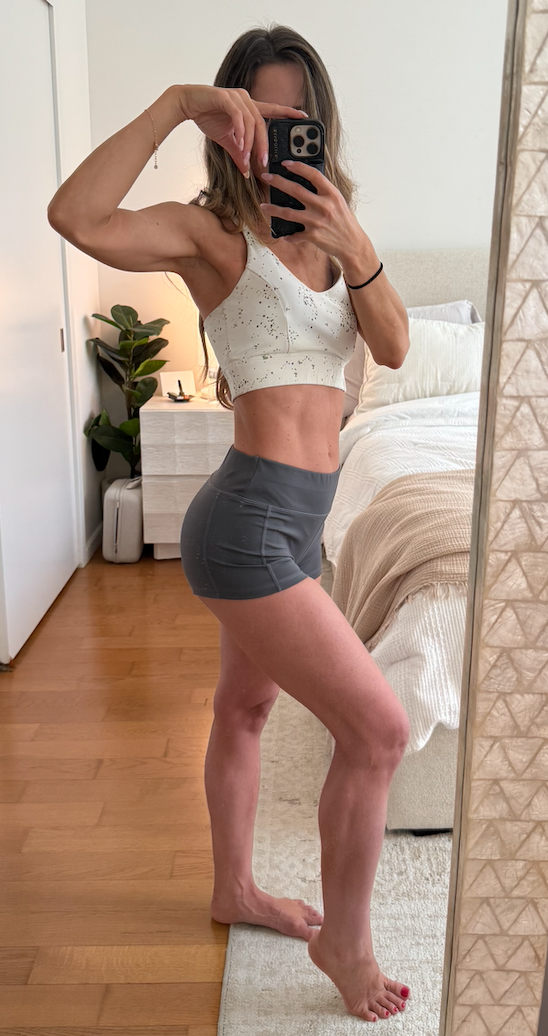
Brianne P
Can you lose weight and gain Muscle at the same time?
A lot of clients come in thinking they have to choose between losing weight and gaining muscle.
In reality, especially early on, you can absolutely do both.
I see this all the time with new clients. Within the first few months:
Body fat falls
Strength increases
Muscle definition improves
That my friends, is body recomposition.
Research supports this—when you combine resistance training, adequate protein, and a controlled calorie deficit, you can lose fat while gaining lean mass.
From a coaching standpoint, the keys are:
Lifting with intent (progressive overload)
Eating sufficient protein
Not over-restricting calories
Where people go wrong is trying to rush fat loss. If the deficit is too aggressive, performance drops and muscle gain stalls.
The clients who see the best recomposition results are the ones who:
Train hard
Stay consistent
Take a long-term approach
You don’t need extreme dieting to see real results.

Lucas W
Does Your Metabolism Actually Slow Down at 30?
This is one of the most common things I hear from clients:
“I turned 30 and my metabolism just died.” It puts the blame on something they can’t control, “It’s not my fault, I just have a bad metabolism now that I’m older.”
In reality, that’s not what’s happening.
From both research and what I see in practice, metabolism doesn’t meaningfully slow down at 30. What changes is lifestyle.
People move less. They sit more. They stop lifting consistently. And over time, they lose muscle, eat more, and their workout routine behind.
Muscle is metabolically active, so when you lose it, your daily energy expenditure drops slightly, but that’s not a broken metabolism, that’s just less lean tissue and less movement.
I’ve had plenty of clients in their 30s and 40s get leaner and stronger than they were in their 20s once they started:
Strength training consistently
Eating appropriately
Increasing daily activity
The difference isn’t age: it’s behavior.
So when someone tells me their metabolism slowed down, what I’m really hearing is: “My routine changed, and I got lazy.”
The good news is that it’s completely reversible.
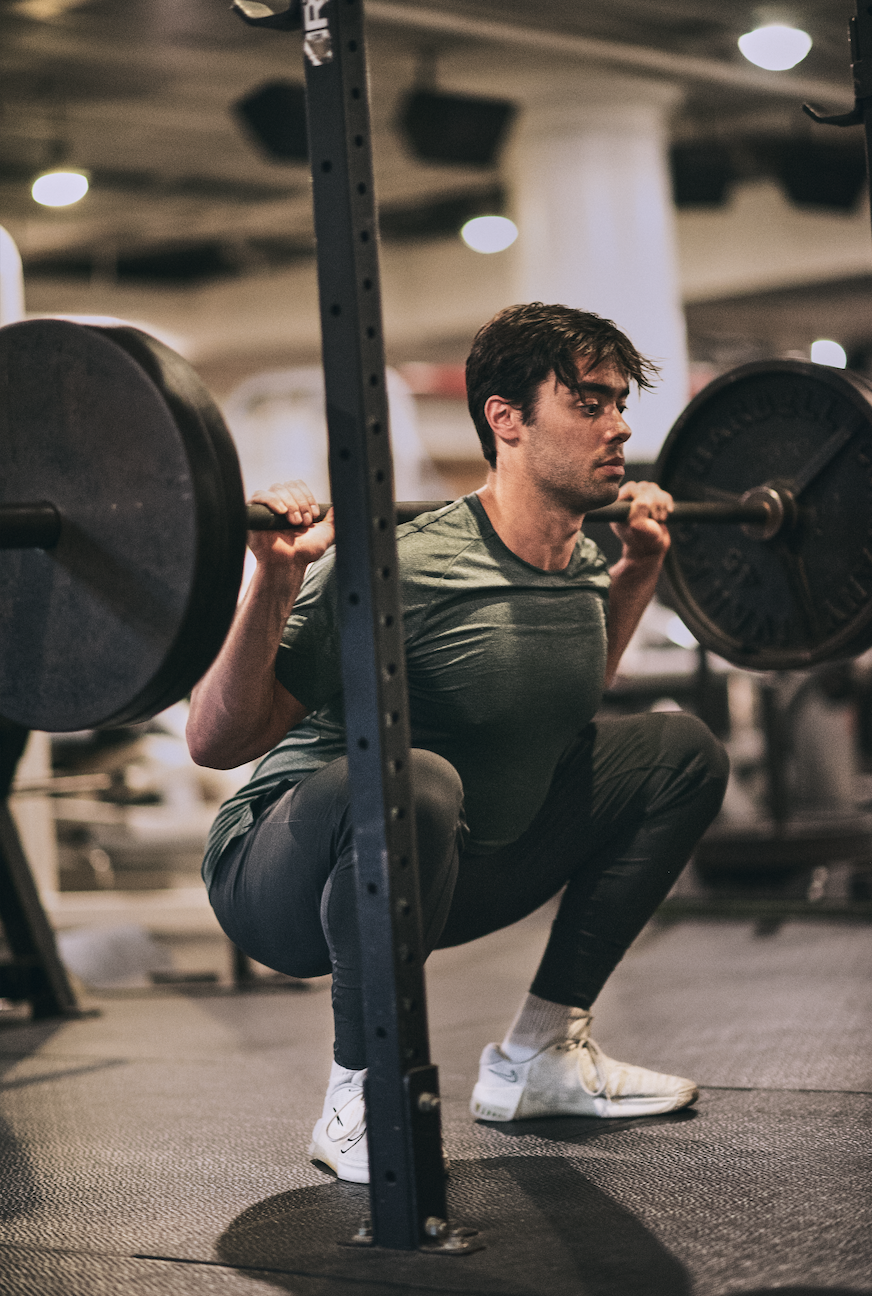
Strength Training vs Cardio for Fat Loss — Which Works Better?
I get this question constantly, and my answer is always the same:
Both matter, but they’re not equal.
Cardio is great for burning calories in the moment. It’s efficient and important for overall health.
But if your goal is to actually look better as you lose weight, strength training is non-negotiable.
I’ve seen countless clients come in after doing months of cardio. They’ve lost weight, but they’re not happy with how they look. There’s no shape, no definition.
Once we introduce resistance training:
Muscle starts to build
Body composition improves
They look significantly leaner at the same weight
Not to mention they also feel significantly better
Aspects of their life have gotten better that they didn’t even think of: sleep, happiness, carrying the groceries, etc.
Research backs this up, resistance training helps preserve (and even build) lean mass during fat loss, whereas cardio alone can lead to muscle loss.
My general approach:
Prioritize strength training and a calorie deficit
Use cardio as a supplement
That combination consistently produces the best results.

Can I Make Progress by Only Lifting Once Per Week?
Yes, if you’re working with a personal trainer. I’ve had plenty of clients start here: busy schedules, limited availability, just trying to do something.
And yes, they did make progress.
But there’s a difference between making progress and optimizing progress.
From both research and experience:
Once per week → you’ll improve, especially as a beginner
2–3x per week → significantly better results (Most of my clients train 2x per week and see their desired results in about 6 months)
When I train someone once per week, I make that session count:
High intensity
Training
Focusing on high value compound movements
Recommend they train additionally to our lone session
But realistically, progress will be slower.
The bigger issue isn’t frequency, it’s consistency. One session per week done consistently over months is far more effective than an inconsistent 3x/week plan.
So if once per week is all you can do right now: It’s absolutely worth doing, and start now rather than waiting until you have more time.
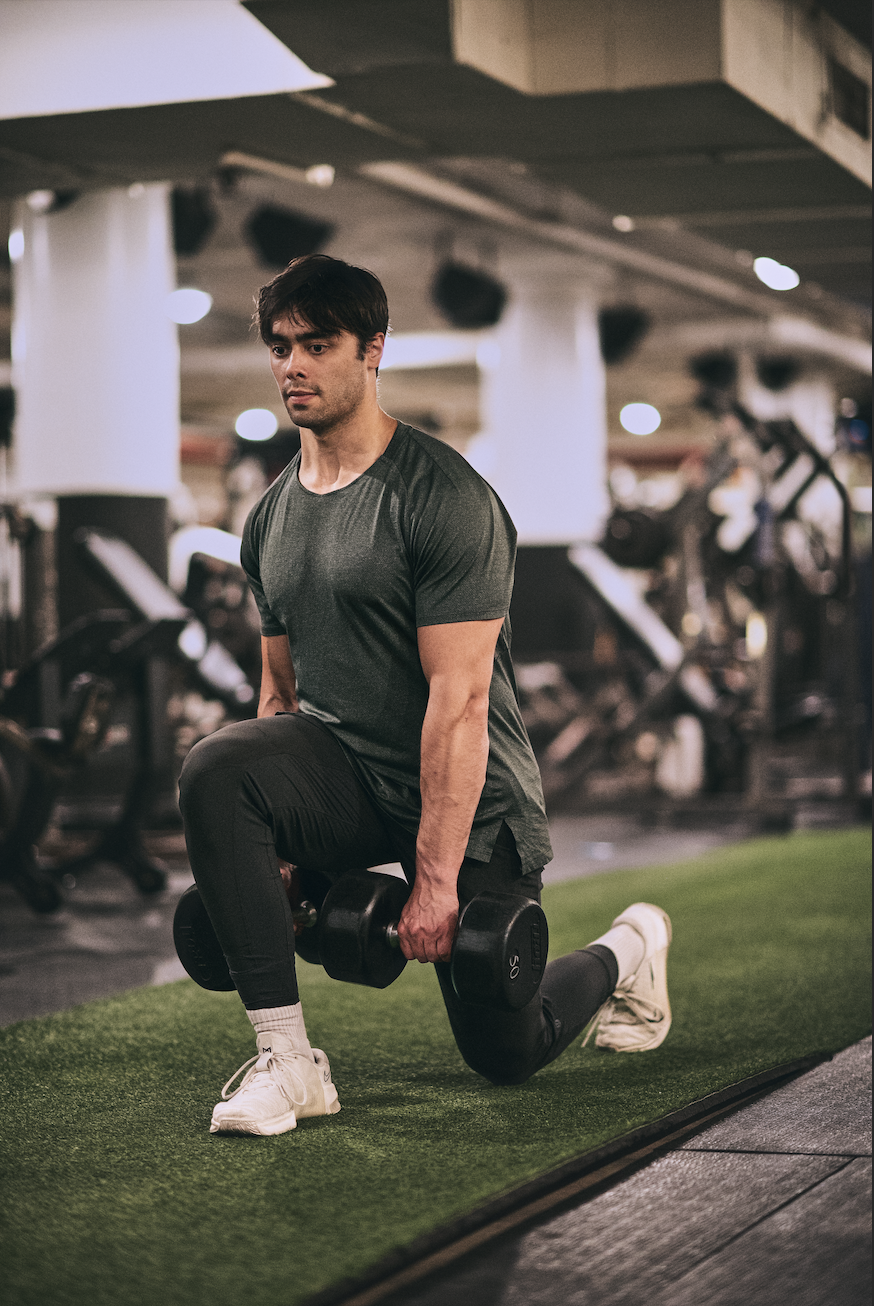
How to Optimize your Health and Wellness Routine
Most of my clients are busy professionals with long days at the desk and little time for life outside the office (including their health routine), and the biggest mistake I see is overcomplicating it. They focus on the minute details, lose focus and then everything falls apart. Stop worrying about seed oils, green powders, and ice baths.
You don’t need a perfect routine; you need a repeatable one.
The structure I use with clients is simple:
1. Strength Training (2–3x/week)
This is the foundation. It drives body composition, strength, and long-term health.
2. Cardio (1–2x/week)
Short sessions or intervals are enough to support cardiovascular health.
3. Daily Movement
Steps matter more than people think. Staying generally active outside the gym makes a big difference.
4. Sleep
This is the most overlooked variable. Poor sleep impacts recovery, performance, and fat loss.
From my experience, the biggest differentiator isn’t the program—it’s adherence.
The clients who get the best results aren’t doing anything extreme. They’re:
Showing up consistently
Following a structured plan
Removing decision fatigue
That’s ultimately what a good system, and a good coach, provides.
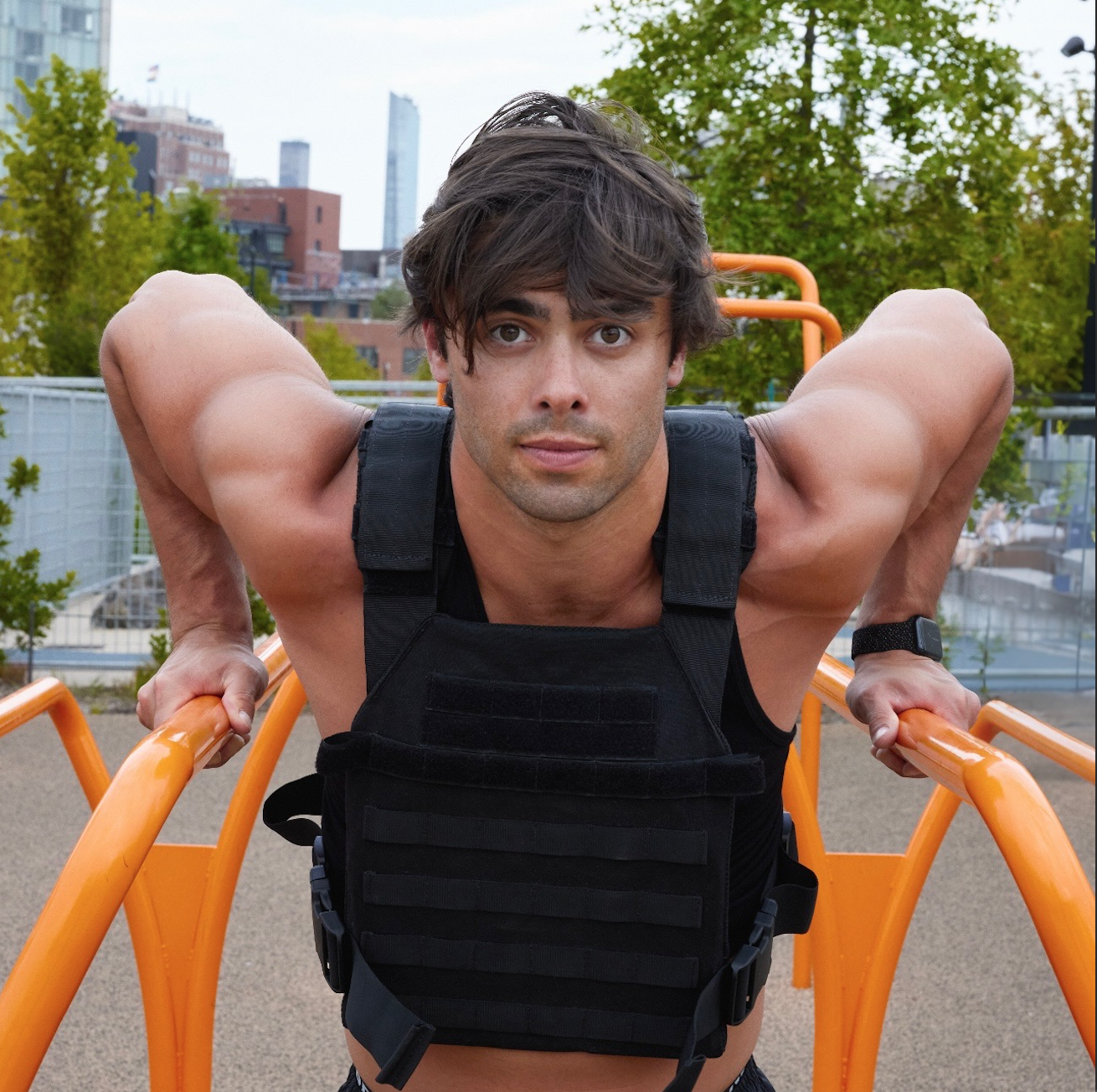
Mental Health Benefits of Strength Training
When most people think about strength training, they think about strength and muscle gains, fat loss; purely aesthetic driven results. Ex. “I want to look more toned.”
But one of the most powerful and overlooked benefits of resistance training is what it does for your mental health.
I’ve seen it firsthand with clients: better mood, improved sleep, more confidence, less anxiety, and a stronger sense of control over their lives.
And this isn’t just anecdotal from my own practice. The research is both clear and substantial:
A large meta-analysis published in JAMA Psychiatry (Gordon et al., 2018) found that resistance training significantly reduces depressive symptoms—regardless of age, health status, or training experience.
A meta-analysis in Sports Medicine (Gordon et al., 2017) found that resistance training leads to significant reductions in anxiety.
Research published in Neurobiology of Aging (Liu-Ambrose et al., 2010) found that strength training improved: Executive function, Memory, and Decision making.
It builds emotional resilience. Every hard set in the gym is controlled stress.
And your body adapts. Strength training teaches you: How to tolerate discomfort. How to push through resistance. How to stay composed under pressure. This carries directly into your work, relationships, and daily life.
Fortunately you do not need to spend countless hours in the gym to reap these benefits. Each of my clients has seen improved mental health, sleep, and emotional stability with as little as 1 hour of resistance training per week (the optimal being 2-3 sessions a week). You don’t need fancy programs, magic exercises, 2 hour blocks every day for your “optimal workout”. You just need two 30-60min strength sessions, progressive overload, consistency, and to START.